When everything is easy, attention becomes hard: why AI, automation and accessibility are rewriting the role of the content creator in 2026
Page last updated: 28 March 2026
Contents
We are living through a moment where making content has never been easier
Tools that once belonged to design teams, editors or agencies now exist in the pocket of every person online.
AI can script, design and edit. Shopify can launch a brand in a weekend. Knowledge that once lived with experts is now available through a single prompt.
This should have created a golden age for creativity. Instead it has created a crisis.
AI can script, design and edit. Shopify can launch a brand in a weekend. Knowledge that once lived with experts is now available through a single prompt.
This should have created a golden age for creativity. Instead it has created a crisis.
What does this mean?
With every leap forward in digital content creation accessibility, the world becomes noisier.
-
Every creator, brand and founder is posting daily.
-
Every agency is producing ads at scale.
-
Every niche has been optimised, recycled and repurposed.
The volume doesn’t slow down, but rather, it multiplies and compounds. And in a landscape built on abundance, the thing that becomes scarce is attention.
What will capture this attention in 2026 comes down to a fundamental shift in how brands must think about approaching content creation.
"This shift, at its core, is to step away from focussing on how much content is being created, but rather, why anyone would care to consume it.”
— Josh Bailey.
Attention is no longer won through volume, polish or speed. It is earned through relevance, perspective and timing. Through saying something that feels true to the moment a person is living in.
This shift is reshaping the role of content creators and brands alike by demanding attention to be increasingly captured through cultural awareness, narrative clarity and human insight, rather than output alone.
The world is drowning in AI content
Learned success creates predictability
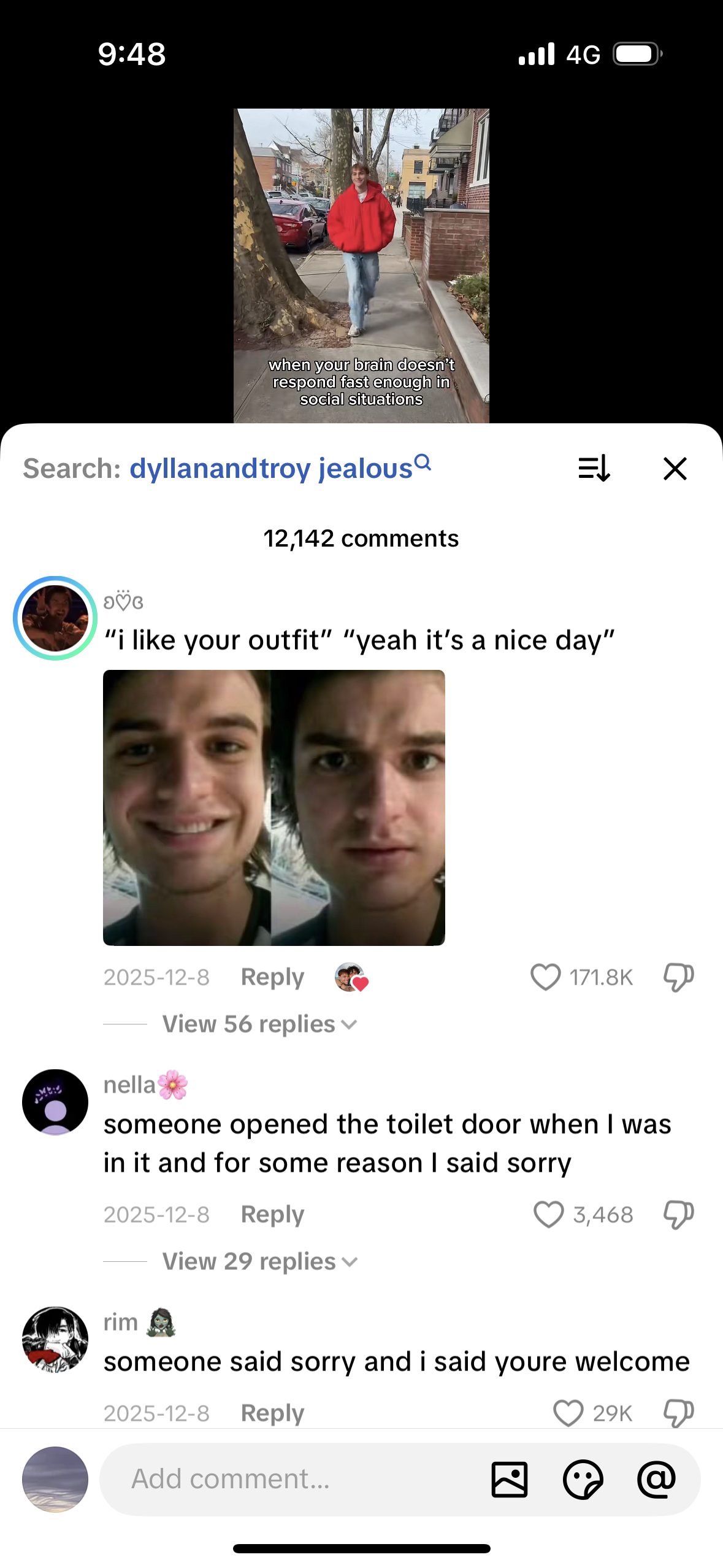
The rise of AI has made content creation simpler. It has also introduced a growing sense of predictability across social platforms.
After spending a certain amount of time on social media with a curious eye, patterns start to reveal themselves. Open any platform and you will see the same:
-
scripts
-
structures
-
ideas dressed in slightly different clothing.
This is not because creators lack imagination. It is because AI tools reward sameness. They generate what has already worked. They learn from the past, not the present. The result is a flood of content that all feels familiar.
An example of this many strategists face can be seen in how tools like ChatGPT generate short-form video scripts. Ask for a TikTok hook or an Instagram Reel idea and the responses often follow a similar formula:
-
a bold opening statement
-
a quick problem setup
-
a list of insights delivered at pace
-
and an all too neat wrap-up designed for retention and driving user actions.
These structures work, which is exactly why they are repeated. Agencies and brand teams adopt them, then apply the same frameworks across dozens of posts, platforms and accounts.
Predictability leads to monotony
As this repetition compounds, it creates a quiet feedback loop.
Familiar formats continue to perform just well enough to be repeated, while repetition gradually trains audiences to expect the same thing.
The impact is subtle but meaningful. Viewers stop paying attention to what is being said and start predicting how it will end. Engagement softens, not because it is “poor” content, but because it no longer offers anything new to think about, feel or react to.
Familiar formats continue to perform just well enough to be repeated, while repetition gradually trains audiences to expect the same thing.
The impact is subtle but meaningful. Viewers stop paying attention to what is being said and start predicting how it will end. Engagement softens, not because it is “poor” content, but because it no longer offers anything new to think about, feel or react to.
“32% of users report experiencing social media fatigue, which leads to burnout and stress.”
— Cropink: 50+ Alarming Social Media and Mental Health Statistics [2026].
On a human level, we are simply not built to process this much noise.
Audiences feel it. Creators feel it. Brands feel it. The fatigue grows every day. And despite all this volume, the cultural impact of content has never felt weaker.
As reliable, performance-oriented frameworks are copied and repeated, they begin to crowd out original thought, leaving less room for creators to express trailblazing opinions. Over time, this dampens the space where culture is actually formed, replacing perspective and authenticity with scripts optimised to perform, not to say something new.
When making content becomes easy, standing out becomes hard
Ease does not create excellence. It creates competition.
When everyone has access to the same tools, the same information and the same shortcuts, the challenge shifts from “how do we make content?” to “how do we make content that stands out and captures attention?”
To answer this question:
- Begin by clearly defining who you are creating content for.
- Understand how that audience uses and expects content on the platform you are publishing on.
- Form a clear point of view that aligns with what that audience cares about.
- Translate that point of view into a simple, recognisable story or message.
- Post, listen, and refine what you create based on audience response.
Put simply, it comes down to knowing who your audience is, understanding what they come to a platform for, and delivering that with intention.
It is no longer enough to be the loudest, the quickest or the most consistent. Audiences ignore what feels like output for the sake of output.
-
They scroll past content that speaks at them rather than to them.
-
They reject repetition.
-
They reject generic information.
-
They reject content that feels like it could have been made by anyone.
From my perspective, this understanding is built through deliberate social listening rather than assumptions.
-
Platforms like Reddit are useful for observing how people talk about their problems, desires and motivations in their own words, often revealing what they are actually looking to consume when they open social media.
-
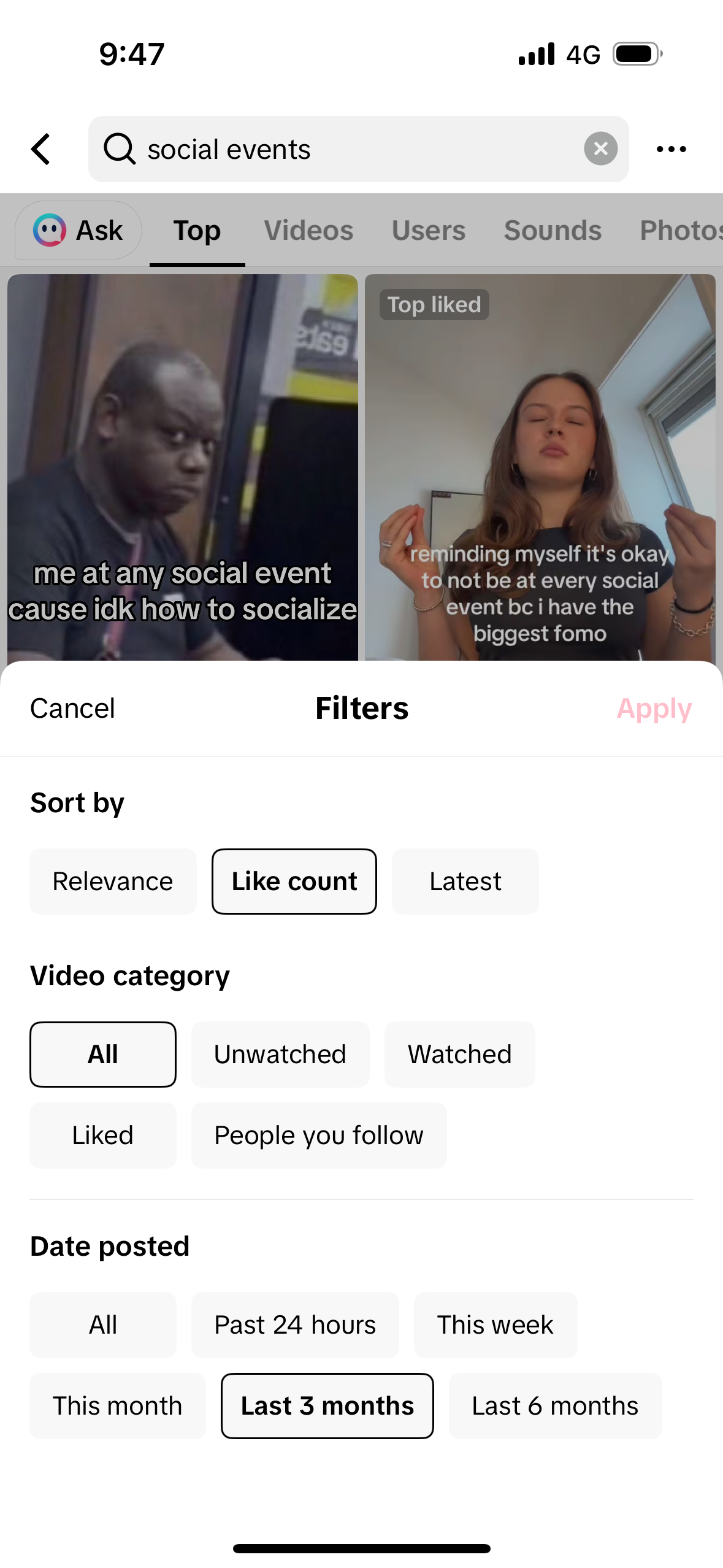
I also use TikTok’s search tool to explore keywords related to a target audience, filtering by the ‘most liked’ content from the past ‘3 months’ to surface the topics, narratives and conversations generating the strongest engagement within that niche.


These signals offer fresh insight into user behaviour and psychology, directly shaping how my content strategies are formed.
In a landscape where tools and shortcuts are available to everyone, this somewhat 'manual' style of intentional listening becomes one of the few remaining ways to create real differentiation.
It’s all grounded in the same truth. If something becomes easier for everyone, it becomes harder to be the best at it.
In a landscape where tools and shortcuts are available to everyone, this somewhat 'manual' style of intentional listening becomes one of the few remaining ways to create real differentiation.
It’s all grounded in the same truth. If something becomes easier for everyone, it becomes harder to be the best at it.
This shift is changing the role of content creators
Perspective matters
Five years ago, growth on social platforms could be driven by information alone. Sharing tips, facts or educational insights was often enough to attract attention and build an audience. That landscape has shifted.
Tools like ChatGPT, Claude and AI Search now answer most questions instantly, with clarity and speed that social platforms were never designed to compete with.
As a result, the function of social content has changed.
-
When someone is looking for a quick answer, they turn to a machine.
-
When they are looking to understand how something feels, how it fits into their life or why it matters at all, they turn to other people.
Put frankly by popular brand strategist Eugene Healey:
"I make money off my perspective. The better the perspective, the more I make."
Interpretation adds more value than explanation
This is where creators have found their new relevance. Their value sits in interpretation rather than explanation. In how they frame ideas, connect dots and articulate truths that feel familiar but have not yet been named.
Information no longer resonates with audiences. It is the perspective wrapped around it that does.
The human lens
We are in a moment where audiences respond to meaning more than accuracy. Stories, lived experiences and personal insights carry weight in a way that facts alone no longer do.
The role of the creator has shifted alongside this behaviour, moving closer to sense-making, cultural context and storytelling that reflects how people actually experience the world.
Human-led storytelling now matters more than creative output

The creators who break through today are not the ones who post the most. They are the ones who say something true. Something lived. Something that mirrors the audience’s own emotions in a way they could not put into words themselves.

"People are not scrolling for content. They are scrolling for connection."
The shift away from information content has moved us toward people content.
Stories from real experience. Insights drawn from real culture. Ideas that sound like they came from a conversation with a friend, not a piece of software. This kind of content lands because it carries intention. Emotion. Interpretation. It carries the weight of being human.
Editing styles, content formats, visual tone, hooks and everything in between all matter. These form your very important content strategy that runs holistically throughout all digital channels of your brand And what truly cuts through the noise and resonates with audiences is the message behind it all.
Stories from real experience. Insights drawn from real culture. Ideas that sound like they came from a conversation with a friend, not a piece of software. This kind of content lands because it carries intention. Emotion. Interpretation. It carries the weight of being human.
Editing styles, content formats, visual tone, hooks and everything in between all matter. These form your very important content strategy that runs holistically throughout all digital channels of your brand And what truly cuts through the noise and resonates with audiences is the message behind it all.
Creators as cultural translators
Creators now operate inside culture rather than outside it. They absorb shifts as they happen, noticing how language changes, how humour evolves and how attention moves from one idea to the next. What they share is not culture itself, but their interpretation of it, shaped by their own identity, experience and point of view.
A clear example of this plays out on TikTok
Through formats like greenscreens and reactive commentary.
When major cultural moments surface, such as rising cost-of-living pressure or shifting attitudes toward work and consumption, creators often respond by reacting to headlines or everyday scenarios using greenscreens and direct-to-camera narration.
Rather than reporting the news, they interpret it. A creator might greenscreen the cost of essential groceries, then use humour, frustration or self-awareness to articulate what many people are already feeling but have not yet named.
When major cultural moments surface, such as rising cost-of-living pressure or shifting attitudes toward work and consumption, creators often respond by reacting to headlines or everyday scenarios using greenscreens and direct-to-camera narration.
Rather than reporting the news, they interpret it. A creator might greenscreen the cost of essential groceries, then use humour, frustration or self-awareness to articulate what many people are already feeling but have not yet named.
Authenticity + relevancy = engagement
This process turns cultural movement into something people can recognise and respond to. Audiences connect with content that reflects how they already feel, even if they have not consciously articulated it yet.
For brands, this translation becomes especially valuable. Community behaviour, emerging norms and shared frustrations are reshaped into stories that feel timely and relevant to the people they are trying to reach.
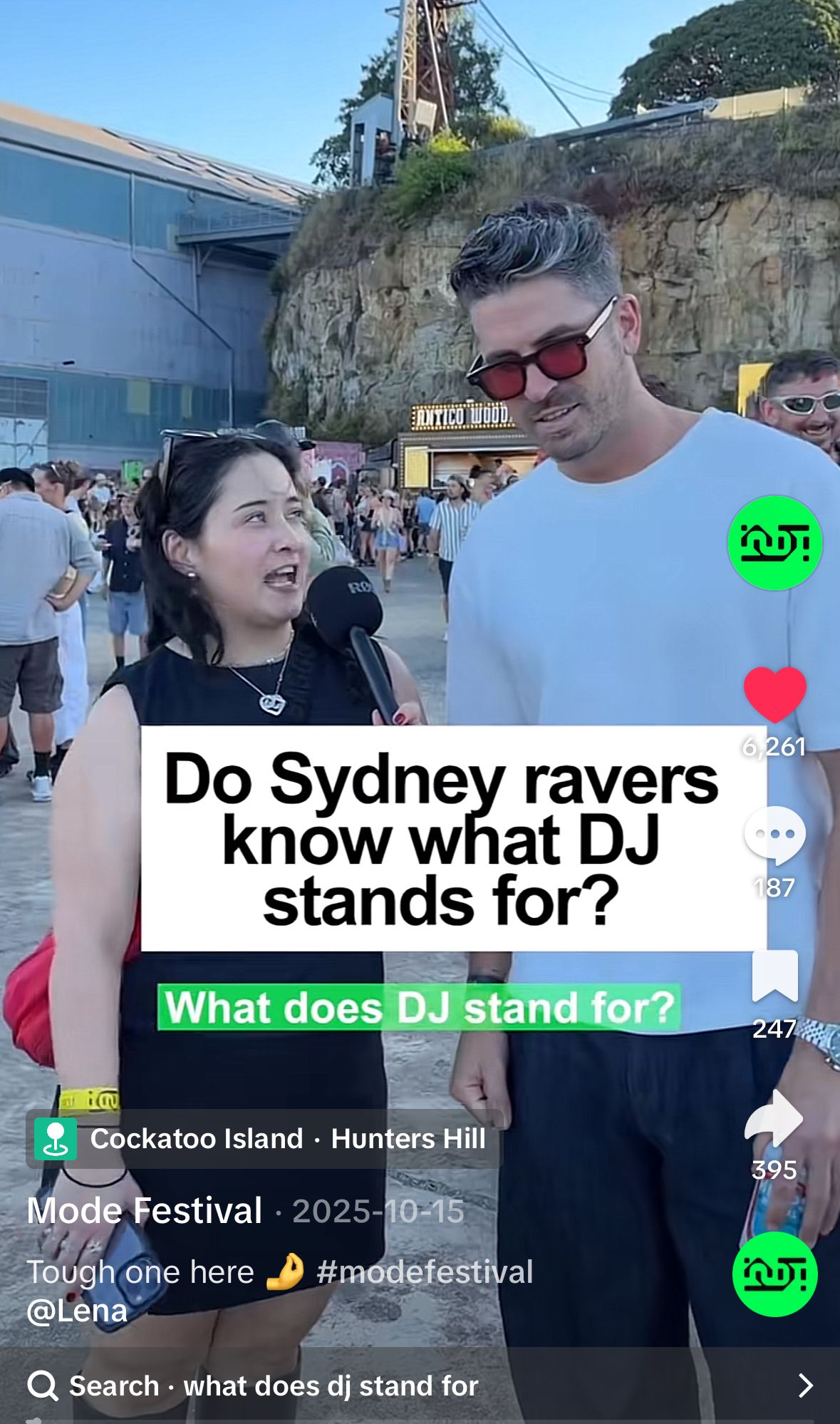
I recently worked with Mode Festival to launch a creator-led interview series on TikTok where festival attendees were asked light, unexpected questions such as, “What does DJ actually stand for?”
The humour came from the fact that most could not answer or answered confidently but incorrectly, turning a shared cultural blind spot into a moment of recognition that felt authentic to the festival environment rather than manufactured for engagement.
For brands, this translation becomes especially valuable. Community behaviour, emerging norms and shared frustrations are reshaped into stories that feel timely and relevant to the people they are trying to reach.
I recently worked with Mode Festival to launch a creator-led interview series on TikTok where festival attendees were asked light, unexpected questions such as, “What does DJ actually stand for?”
The humour came from the fact that most could not answer or answered confidently but incorrectly, turning a shared cultural blind spot into a moment of recognition that felt authentic to the festival environment rather than manufactured for engagement.
Cultural moment
Something happens.
Creator observation
They notice this organically.
Creator interpretation
They frame it in their own language or perspective.
Content expression
Their interpretation is crafted in a format for their platform and audience, e.g. storytelling to camera.
Audience recognition and response
Viewers feel seen, understood, heard and react in comments, further perpetuating the cultural movement.
This kind of work resists automation
Cultural shifts are felt before they are defined. Emotional undercurrents show up in tone, timing and delivery long before they appear in data. Creators who move with confidence here tend to shape the direction of conversation rather than follow it. They trust their instincts, use their voice and allow repetition and familiarity to do the work of recognition over time.
An example: translating the complex into familar moments of relief
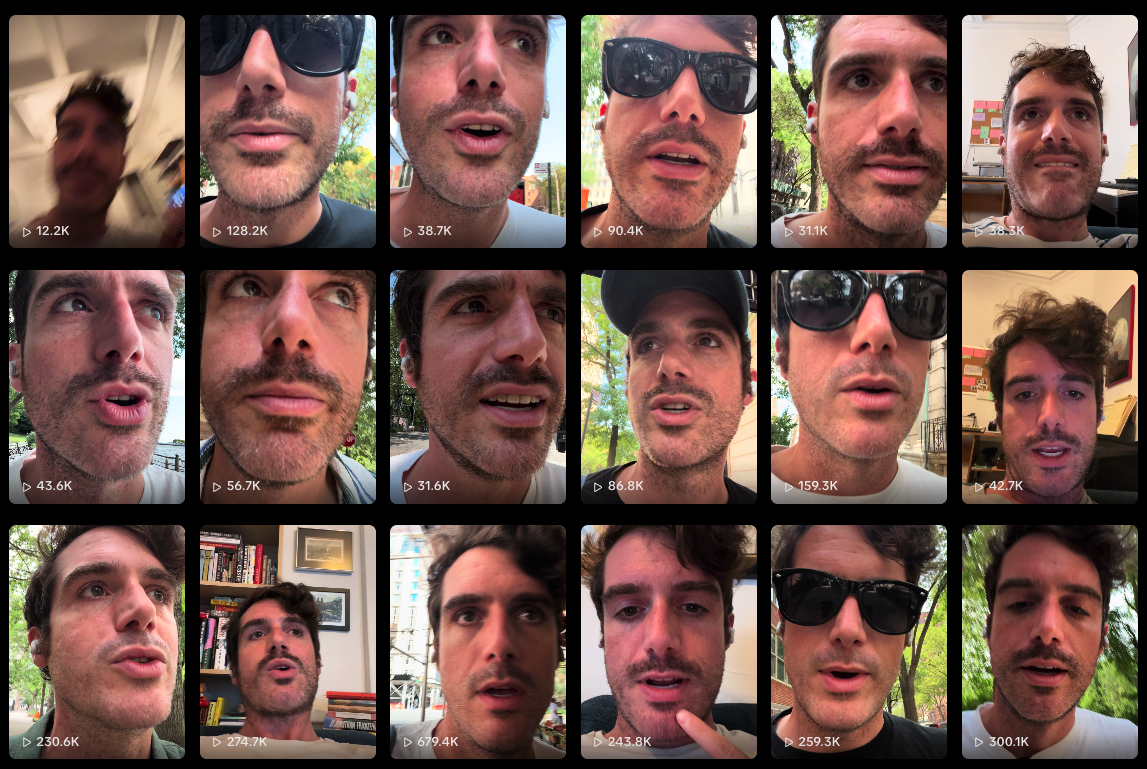
TikTok creator Matt Booshell is my favourite example of this.
Matt consistently uses the same simple format: walking through the streets of New York while offering conversational observations about politics, the economy, social media and everyday absurdities.
His videos work because they translate complex or overwhelming moments into familiar, often comedic reflections, like framing economic anxiety through the lens of food delivery apps offering payment plans.
Matt consistently uses the same simple format: walking through the streets of New York while offering conversational observations about politics, the economy, social media and everyday absurdities.
His videos work because they translate complex or overwhelming moments into familiar, often comedic reflections, like framing economic anxiety through the lens of food delivery apps offering payment plans.
"I'm not saying we're a society on the verge of collapse but when Doordash is offering you a payment plan, something is going terribly wrong.
If you've got to finance your burrito bowl, it doesn't scream 'golden age of prosperity' to me."
— Matt Booshell.
If you've got to finance your burrito bowl, it doesn't scream 'golden age of prosperity' to me."
— Matt Booshell.
Matt provides a consistent, familiar format of talking directly to camera in a conversational manner.
Brands are becoming social studios and creators are the cast
Consistency and continuity are crucial
Social media content now demands a level of consistency and continuity that sits outside traditional marketing cycles.
Isolated posts struggle to hold attention when audiences are used to following ongoing stories or open platforms to return to their favourite creators each day.
What cuts through the noise in 2026 often resembles the structure of ongoing entertainment rather than single video insights or concepts. From a strategic perspective, this can be built as cohesive storytelling that continues to relate to the brand and its target audience.
Many brands have started to adapt by building internal systems that look closer to studio environments. Strategy, scripting, set design and recurring formats all play a role.
Isolated posts struggle to hold attention when audiences are used to following ongoing stories or open platforms to return to their favourite creators each day.
What cuts through the noise in 2026 often resembles the structure of ongoing entertainment rather than single video insights or concepts. From a strategic perspective, this can be built as cohesive storytelling that continues to relate to the brand and its target audience.
Many brands have started to adapt by building internal systems that look closer to studio environments. Strategy, scripting, set design and recurring formats all play a role.
-
Characters are shaped.
-
Themes develop.
-
Stories unfold over weeks and months instead of being reset with every post.
How creators and brands use GenAI tools to win audiences
Human-driven
-
Interpreting why a moment matters culturally.
-
Forming the core point of view and narrative angle.
-
Tone, timing and delivery on camera.
-
Reading audience sentiment and emotional response.
-
Cultural judgement, instinct and lived experience.
AI-supported
-
Trend scanning and pattern recognition across platforms.
-
Drafting early script outlines or idea prompts.
-
Editing assistance, captions, subtitles and formatting.
-
Polishing scripts and human-led ideas.
-
Repurposing content into multiple formats or lengths.
"AI accelerates execution and reduces friction, but meaning, relevance and trust are still shaped by human judgement.”
— Josh Bailey.
Considered content production: putting it all together
The brands that operate most effectively as social studios use AI to support the mechanics of production, while relying on creators to lead interpretation, storytelling and cultural connection.
Within this structure, creators become central to the experience. They bring personality, tone and narrative coherence.
Viewers return because they recognise the voice on screen and feel invested in the story being told.
Over time, the creator becomes the connective tissue between the brand and its audience. This ongoing familiarity between brands and their audiences on social media builds the trust required to incentivise a purchasing decision.
Awareness
Creators earn attention by reflecting cultural moments and emotions audiences already recognise, making the brand feel familiar rather than intrusive.
Consideration
Trust is built as creators consistently express a clear point of view, helping audiences understand what the brand stands for and why it aligns with their own values.
Conversion
Action follows once credibility is established, with purchasing decisions shaped by repeated exposure to a human voice that feels informed, relevant and trustworthy. At this point, audiences are more open to clear and direct calls to action from creators they already trust.
The challenge most brands face is not production quality. It is narrative continuity. Attention is sustained and trust eventually earned when people know what they are stepping into and feel a reason to come back again tomorrow.
The need for creator brand proximity in our current phase of social
Keep creators close to the heart of the brand
Creators who work at arm’s length from a brand are often forced to operate with partial information. They are given briefs without the day-to-day context that shapes how a brand actually lives, speaks and responds in the world. Over time, this distance shows up in the work.
-
Ideas take longer to move.
-
Feedback loops slow down.
-
Conversations fragment across emails, approvals and second-hand opinions.
-
Momentum disappears just as something promising starts to form.
-
The content might look polished, but it lacks urgency, relevance and emotional pull.
When creators are embedded inside a brand, the dynamic shifts.
-
They gain access to the conversations happening in real time.
-
They understand why decisions are being made, not just what needs to be delivered.
-
This proximity gives them the confidence to move faster and the clarity to make better creative calls.
Brands begin to operate more like social production teams.
-
Ideas are tested quickly.
-
Stories evolve across posts.
-
Creators are no longer translating instructions but interpreting the brand itself.
-
Over time, this creates a rhythm that external partnerships struggle to replicate.
Embedded content strategy is a long game, built in short and continuous moments
When thinking about creators you work with remotely (whether that be in-house or outsourced), proximity is less about physical location and more about access, shared context and genuine visibility into your full creative process, rather than a ‘plug and play’ approach.
Staying embedded in an online workplace means being connected to live conversations through shared channels (i.e. Slack) and project management tools (i.e. Monday.com, ClickUp), weekly check-ins and visibility into decision-making and how content drives overall business outcomes.
The difference is embedding creators into your system, rather than sending email briefs and demanding a 7-day turnaround.
The outcome is simple: a creator with brand context will always outperform a creator without it.
Staying embedded in an online workplace means being connected to live conversations through shared channels (i.e. Slack) and project management tools (i.e. Monday.com, ClickUp), weekly check-ins and visibility into decision-making and how content drives overall business outcomes.
The difference is embedding creators into your system, rather than sending email briefs and demanding a 7-day turnaround.
The outcome is simple: a creator with brand context will always outperform a creator without it.
What this means for brands in 2026
Creative ownership, quality and alignment
As AI accelerates the volume of content online, meaning becomes harder to manufacture and easier to recognise.
As access to tools becomes universal, perspective becomes the real differentiator. As sameness spreads, identity starts to matter again.
Brands that perform well in this environment will take creative ownership seriously. They will build internal capability around storytelling, not just execution. They will prioritise creators who understand culture deeply and can articulate it with clarity and conviction. They will think in series and ongoing ideas rather than isolated posts.
Build social presence with intention
A good example of this approach can be seen in how early-stage startup Kinso AI has built its social presence.
Rather than outsourcing content or relying solely on founder updates, the company centred its hiring around young, ambitious creators who naturally reflect the energy, curiosity and uncertainty of inexperienced founders or those entering the start of their careers.
These creators led employee-generated content formats that documented their own experience of working inside a startup, from chasing a 10,000-person waitlist before launch to navigating high-stake challenges set by the founders in real time.
By translating founder insight into relatable, first-person storytelling, the creators helped ground Kinso’s messaging in startup culture and bring audiences along for the journey. The result was ongoing, series-based content that felt human, familiar and credible to a social-native audience.
Most importantly, they will treat social content as something that is built over time, shaped by people who are close enough to care and informed enough to act with intention.
Rather than outsourcing content or relying solely on founder updates, the company centred its hiring around young, ambitious creators who naturally reflect the energy, curiosity and uncertainty of inexperienced founders or those entering the start of their careers.
These creators led employee-generated content formats that documented their own experience of working inside a startup, from chasing a 10,000-person waitlist before launch to navigating high-stake challenges set by the founders in real time.
By translating founder insight into relatable, first-person storytelling, the creators helped ground Kinso’s messaging in startup culture and bring audiences along for the journey. The result was ongoing, series-based content that felt human, familiar and credible to a social-native audience.
Most importantly, they will treat social content as something that is built over time, shaped by people who are close enough to care and informed enough to act with intention.
Build social content right to ensures it lasts
When social content is built this way, the result is not just short-term attention, but long-term brand equity. Familiarity compounds, trust deepens and audiences begin to recognise the brand as a consistent presence, rather than a passing interruption.
Over time, this creates a brand that cuts through the saturated world of social media simply because audiences are now actively seeking out its content, rather than perceiving it as a disruption to their consumption experience.
In this new landscape, success belongs to the brands who understand one simple truth…
In a world where social content has become effortless, it is the humans behind it who become irreplaceable.
Over time, this creates a brand that cuts through the saturated world of social media simply because audiences are now actively seeking out its content, rather than perceiving it as a disruption to their consumption experience.
In this new landscape, success belongs to the brands who understand one simple truth…
In a world where social content has become effortless, it is the humans behind it who become irreplaceable.
Connect your content to your audience

Change how your content machine works, and make it work for you and your customers. We help you design and implement a strategy that ensures your brand cuts through the noise to reach and attract your customers. Get in touch with us today.
Thank you!

Author bio
Josh Bailey works at the intersection of creativity and business growth. He began his content journey at Apple’s global media agency delivering digital and social execution, where he developed an early interest in how ideas, when communicated creatively, can influence perception and behaviour. He later joined TikTok, deepening his understanding of short-form video, platform dynamics and the cultural nuances that shape attention online.
Today, Josh is the founder of a creative service, CoCo, that empowers brands to grow through embedded creator systems, with a focus on building internal creative capability, narrative clarity and long-term cultural relevance rather than surface-level content outputs.

Content Design Hub is a marketplace for individuals and companies to learn, upskill and invest in specialised content skills.
We're grateful to the Traditional Owners of the lands throughout Australia on which we live, learn and work. We pay our respects to their Elders, past, present and emerging.
Policy pages
Social media
Copyright © Content Design Hub 2026. All rights reserved.